Malaria, Vaccines and Staying Healthy at Victoria Falls
A practical health guide for Victoria Falls covering malaria risk, recommended vaccines, water safety and the small precautions that keep your trip on track.
Malaria, Vaccines and Staying Healthy at Victoria Falls
Victoria Falls is a safe, well-set-up destination, and most travellers come home with nothing worse than sunburn and a memory card full of spray photos. But a little planning around health goes a long way, especially when it comes to malaria. This is a practical guide, not medical advice, so always confirm the details with a travel clinic or your doctor before you go.
Key takeaways:
- Victoria Falls sits in a malaria area, with the highest risk during and just after the rainy season from around November to April.
- Antimalarial tablets plus good mosquito-bite prevention are the standard approach; discuss which tablet suits you with a doctor.
- No vaccines are legally required unless you are arriving from a yellow fever country, but a few routine jabs are worth being current on.
- Tap water is best avoided; stick to bottled or filtered water and normal food hygiene.
Is there malaria at Victoria Falls?
Yes. Both the Zimbabwean and Zambian sides sit within a malaria transmission zone. The risk is not constant, though. It rises sharply during the green season and the months that follow, roughly November through April, when standing water lets mosquitoes breed. In the dry season from about May to October the risk drops considerably, but it never disappears entirely.
Malaria here is the falciparum type, which is the kind that can become serious, so it is worth taking seriously regardless of season.
Antimalarial tablets
Most travellers to Victoria Falls take a course of antimalarial tablets. The common options are:
- Atovaquone-proguanil (Malarone): Started one to two days before you arrive, taken daily, and continued for seven days after you leave. Well tolerated by most people and popular for shorter trips.
- Doxycycline: A cheaper daily tablet, started before arrival and continued for four weeks after. Can increase sun sensitivity, which matters at the falls.
- Mefloquine (Lariam): A weekly tablet, but with more potential side effects, so less commonly recommended now.
Which one is right depends on your health, how long you are staying and other medication you take. This is exactly the conversation to have at a travel clinic four to six weeks before departure.
Preventing bites in the first place
Tablets are only half the story. Avoiding bites is just as important:
- Use a repellent containing DEET or picaridin, especially from late afternoon into the evening when the malaria-carrying mosquitoes are active.
- Wear long sleeves and trousers at dusk and after dark.
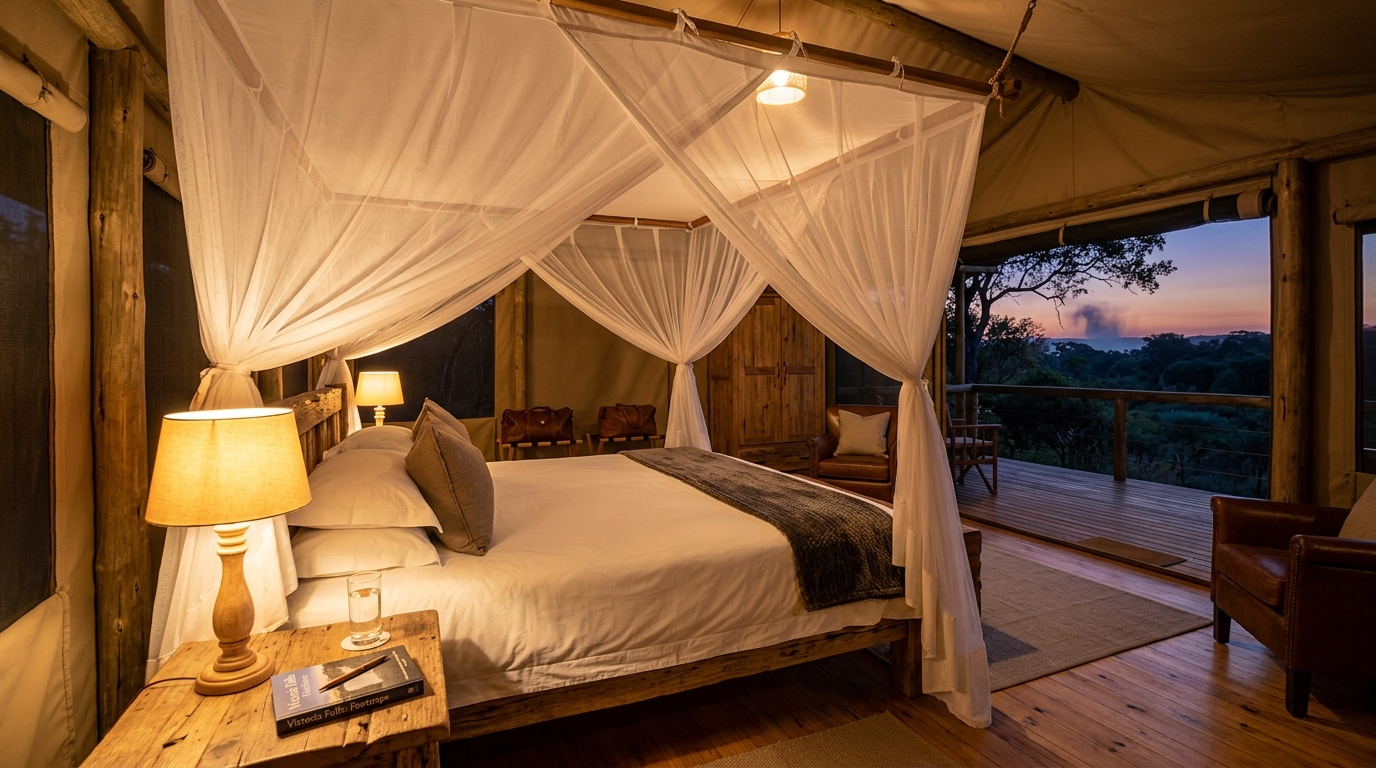
- Sleep in air-conditioned or screened rooms, or under a treated mosquito net. Most lodges provide nets.
- Choose light colours in the evening, as mosquitoes are drawn to dark clothing.
These habits also make the evenings more pleasant, which helps when you are heading out to something like the Boma dinner and drum show.
Vaccines to consider
No vaccine is legally required to enter Zimbabwe or Zambia unless you are travelling from, or transiting through, a country with a risk of yellow fever, in which case you must show a yellow fever certificate. Check your full route, because a layover can trigger the requirement.
Beyond that, a travel clinic will typically make sure you are current on routine vaccines such as tetanus, and may suggest hepatitis A and typhoid, which are standard recommendations for the region. Discuss your personal history and plans with a professional.
Food and water
Stomach upsets are more common than malaria among travellers, and they are easy to reduce:
- Drink bottled or properly filtered water, and use it for brushing teeth if you are unsure.
- Skip ice unless you know it is made from safe water.
- Eat food that is freshly cooked and served hot. Lodges and restaurants catering to visitors generally have high standards.
- Peel fruit yourself where you can.
The good news is that the main restaurants and lodges in town are well used to international guests, so eating out is low risk if you use common sense.
The heat and sun
The sun at the falls is strong year round, and the hot dry months before the rains can be genuinely fierce. Carry water, wear a hat and high-factor sunscreen, and pace outdoor activities in the middle of the day. The spray from the falls is refreshing but does not protect you from burning.
A simple pre-trip checklist
- Book a travel clinic appointment four to six weeks before you go
- Confirm which antimalarial suits you and start it on schedule
- Pack repellent, sunscreen, a hat and any personal medication in your carry-on
- Get comprehensive travel insurance that covers your planned activities
- Note the nearest clinic or hospital to your accommodation
The bottom line
Do not let health worries put you off. Victoria Falls is visited safely by huge numbers of travellers every year. Take your antimalarials, avoid bites, be sensible with food and water, and you can focus on the reason you came, whether that is the helicopter flight, the rafting, or simply standing in the spray. For everything else about planning your trip, start with our complete travel guide.
Ready to Experience Victoria Falls?
Explore our curated selection of activities and start planning your unforgettable adventure today.