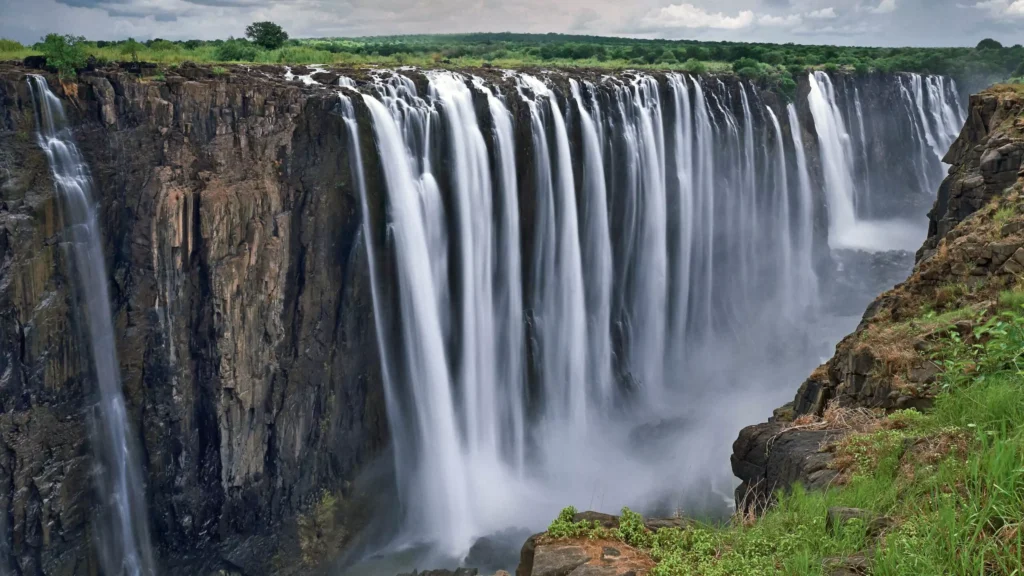
The History of Victoria Falls and David Livingstone
The story of Victoria Falls, from its ancient name Mosi-oa-Tunya and local heritage to David Livingstone's 1855 arrival and the falls' place in history.
The History of Victoria Falls and David Livingstone
Long before it appeared on any map, the great waterfall on the Zambezi had a name given by the people who lived alongside it: Mosi-oa-Tunya, the smoke that thunders. The story of Victoria Falls is really two stories, one of deep local heritage stretching back generations, and one of a Scottish explorer whose 1855 visit brought the falls to global attention. Knowing both makes standing at the edge far more meaningful.
Key takeaways:
- The falls were known to local communities as Mosi-oa-Tunya, meaning the smoke that thunders, long before European contact.
- David Livingstone became the first European recorded to see the falls, in November 1855, and named them after Queen Victoria.
- The area has deep cultural significance to the peoples of the Zambezi region.
- Today the falls are a UNESCO World Heritage Site shared by Zimbabwe and Zambia.
Mosi-oa-Tunya: the name that came first
The indigenous name, Mosi-oa-Tunya, perfectly captures the falls. From kilometres away you can see the towering spray cloud rising like smoke and hear the thunder of the water. To the communities living along the Zambezi, the falls were a place of power and spiritual significance, not merely scenery. That heritage endures, and the Zambian national park protecting the falls still carries the name Mosi-oa-Tunya. A village or cultural tour is the best way to connect with the living culture of the region today.
David Livingstone and 1855
David Livingstone was a Scottish missionary and explorer who spent years travelling through southern and central Africa. In November 1855, while journeying down the Zambezi, he was guided to the great waterfall by local people. He recorded becoming the first European to see it, and famously wrote that scenes so lovely must have been gazed upon by angels in their flight, a line that inspired the name of today's Flight of Angels helicopter tour.
Livingstone named the falls after Queen Victoria, the reigning British monarch, and that is the name that stuck internationally. He approached by canoe on the calm upper river and was set down on a small island at the very lip of the falls, now known as Livingstone Island, the same island travellers visit today to reach Devils Pool.
The falls enter the wider world
Livingstone's accounts brought Victoria Falls to the attention of the wider world, and interest grew steadily. In the early 1900s the region was linked by rail, and the iconic Victoria Falls Bridge was completed in 1905, spanning the gorge just below the falls. Cecil Rhodes, the driving force behind the railway, reportedly wanted the bridge built where the spray from the falls would fall on passing trains. The bridge still carries road, rail and foot traffic between Zimbabwe and Zambia, and it is where modern visitors now bungee jump into the gorge.
A town grows up around the falls
Victoria Falls town developed as a tourism destination through the twentieth century, drawing travellers from around the world to witness one of the planet's great natural wonders. Today the town is a compact, welcoming base for exploring the falls and the surrounding wilderness, with everything from backpacker hostels to luxury lodges.
Recognition and protection
Victoria Falls is now a UNESCO World Heritage Site, protected on both the Zimbabwean and Zambian sides. That status recognises not just the scale and beauty of the falls but their geological and ecological importance. Visiting responsibly, as our sustainable tourism guide describes, helps ensure the falls and the communities around them thrive for generations to come.
Seeing the history on your visit
You can trace this history in person:
- Stand at the statue of David Livingstone that overlooks the Devils Cataract on the Zimbabwean side.
- Walk or tour the Victoria Falls Bridge and picture the 1905 engineering feat.
- Visit Livingstone Island, where the explorer first looked over the edge.
- Take a cultural tour to hear the local heritage and the meaning of Mosi-oa-Tunya from the people whose ancestors named it.
The bottom line
Victoria Falls is more than a spectacular sight. It is a place layered with meaning, from the communities who named it the smoke that thunders to the explorer who carried its fame around the world, to the bridge and town that grew up in its spray. Understanding that history turns a visit into something richer. Plan yours with our complete travel guide.
Ready to Experience Victoria Falls?
Explore our curated selection of activities and start planning your unforgettable adventure today.